Why Westside Energy: Full-Home Electrification Done Right (Without Wasting Money)

Most air conditioning installers think only in terms of cooling and heating. Westside Energy takes a bigger view.
Because we work across solar, batteries, heat pumps, and reverse-cycle air conditioning, we treat comfort as part of the home’s overall energy strategy. That difference matters for two reasons:
Reason 1: Financial Efficiency
Energy upgrades are rarely cheap, and no homeowner wants to make decisions in the wrong order or install systems that don’t complement each other. Westside designs electrification paths that maximise return on investment instead of leaving fragmented upgrades over time.
For example:
This ensures you’re not wasting money upgrading the wrong appliance first.
Reason 2: Comfort Meets Energy Logic
We assess:
The result isn’t just a more comfortable home — it’s a home that costs less to operate because major loads are powered intelligently.
Bundling and Finance as a Strategy (Not a Sales Trick)
One reason electrification is taking off is because many households don’t want multiple lump-sum purchases. Bundling upgrades into a structured finance plan allows customers to redirect spending from gas and grid electricity into a long-term asset — their home.
Done properly, this can be:
Westside handles the planning, the installation, the sequencing, and the technical details. Homeowners get comfort, lower running costs, and a pathway to a fully electrified home without wasting money along the way.

Air Conditioning + Solar + Battery: Comfort Powered by Your Own Energy

Once a home installs solar, the natural question becomes: “How do I make the most of the energy I’m generating?”
With feed-in tariffs trending lower and daytime electricity production peaking exactly when we want cooling, air conditioning is one of the smartest ways to use excess solar. Instead of exporting power back to the grid for a few cents per kWh, homeowners can redirect that energy into comfort at near-zero cost.
Solar + Reverse-Cycle = Cheap Cooling
In summer, solar output peaks between late morning and late afternoon. That is exactly when air conditioners are being used the most. For households with solar, daytime cooling becomes extremely inexpensive — in many cases effectively free.
Solar + Reverse-Cycle = Cheap Heating
Heating is the bigger financial win. Gas prices and fixed gas supply charges continue to rise. A reverse-cycle system running on solar in the middle of the day allows homeowners to pre-heat spaces at very low cost. When paired with a battery, heating loads can be shifted into the night at much lower running cost than grid electricity or gas.
Electrification Compounds Benefits
Solar alone is good. Solar + reverse-cycle aircon is better. Solar + reverse-cycle + battery is a full energy strategy.
This is called home electrification — and it works because each component increases the value of the others:
The end result is a home that is:
And importantly — making the most of the money already spent on solar.

Why Modern Homes Are Switching to Reverse-Cycle Air Conditioning

If you look at renovation trends over the last decade, one upgrade stands out: reverse-cycle air conditioning has become the default for comfort and efficiency in Australian homes. What started as a premium summer cooling solution is now just as important for winter heating — especially in South Australia’s unpredictable weather.
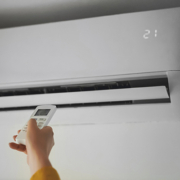
The reason is simple: reverse-cycle air conditioners are heat pumps, and heat pumps are extremely efficient. For every 1 kWh of electricity consumed, a typical modern system can deliver 3–5 kWh of cooling or heating. This makes reverse-cycle one of the cheapest ways to stay comfortable year-round and a clear improvement over portable heaters, panel heaters, or older gas ducted systems.
Heating Matters More Than Most People Think
Cooling gets all the attention, but heating is where homeowners often spend the most money over winter. Gas ducted heating is notoriously expensive to operate, especially if you’re only trying to heat part of the home. Reverse-cycle splits allow room-by-room control, so you only condition the areas you’re actually using.
Comfort + Control + Modern Living
Reverse-cycle brings a few under-appreciated lifestyle improvements:
For many households, upgrading to reverse-cycle is also the first step toward electrifying the home and reducing dependence on gas. This becomes especially powerful once solar enters the picture — because that’s when the financial value of aircon really kicks in.

Dodging dodgy solar

Feeling a bit lost with your solar journey so far? don’t worry, you’re not the only one. Unfortunately, the solar journey can be a hairy one. With so many products on the market, so many companies and infinite price points, it can make your decision a tough one. A great rule of thumb with this industry is how the old saying goes, if it seems too good to be true, it probably is. So how do we navigate these tricky waters without drowning? Make sure to read carefully and we’ll show you how.

Let’s start with the initial enquiry process. Gone are the old days of deceptive sales tactics, on the spot sales pressure and tacky sales gimmicks.  You don’t need to put up with that so good riddance we say! These days it’s all about transparency, consulting to help find out exactly what the customer needs and allowing them space to decide in their own time. Unfortunately for so many solar businesses, they are stuck with the “Old-School” sales mentality and are extremely cutthroat with their approach. Here are some great indicators to help you filter.


No offer to come to site.

The option to come out to site is an extremely important part of any quality solar businesses process, although this doesn’t guarantee that the company is going to be of high quality, it is a great starting point, however. A site visit is really going to iron out most potential issues from the get-go that sometimes a phone consultation just cannot do. It’s important to understand the design of the premises to understand where your solar panels and inverter will go, as well as any issues that may arise that a phone consultation cannot identify. If a business doesn’t offer a site visit or refuses one altogether, that is a pretty good indication you are dealing with a shady operator.


Deposit at point of enquiry? You’re kidding right?

This one is usually a pretty obvious one but if you are being pushed into putting a deposit down at the point of you just enquiring, you need to hang up as quick as you can. Solar is a process. It’s not as simple as here is a system, here is a price, pay now. Any respectful solar business that has their customers best interests in mind will take the time to find out what the customer is hoping to achieve with solar, find out details regarding their energy usage and the offer a tailored package to suit the customer’s needs.


The next part is really knowing who you are dealing with and what products will be the ones to choose. Thankfully for the most part if you choose a good company to go with, generally good products and good advice on products will follow. The trick is choosing the right company. Type “solar” into Google you’re going to have 50+ installers at your fingertips, then you go on your social media and every second ad is going to be solar, you sit down to watch TV, that’s right MORE solar. It’s overwhelming to say the least. The stress of solar is completely justified, we’ve all heard the horror stories and as a matter of fact they are more common than you may think. Despite the fact that the industry is heavily regulated, many businesses enter the solar market, sell solar, close a year later or swap to another name so they don’t have to service old customers. You have interstate businesses that come over to make a quick buck, use the cheapest installers possible which almost always comes with issues, then just decide to pull out of the state 6 months later never to be seen again. In the last 6 years there have been over 740 businesses close their doors which means thousands of customers left with dodgy installs and their warranties out the window. So how do we avoid being victim of another dodgy solar installer? The answers are simple. Longevity.

Make sure the company you decide to go ahead with has been around for a decent period to ensure you are not going to be dealing with just another fly-by-night business that is going to leave you high and dry when you need support.

Local, this a key factor to making sure you have support if anything goes wrong. Going with a local business is not just great because it’s great to support local businesses, but if you have any issues arise you know you have someone in the state that will be there to support you and attend to your issue swiftly.

ISO 9001 Quality Assurance, this is the absolute pinnacle of certifications to ensure you are dealing with a company you can trust. CEC accreditation is something you will find with every solar installer; they pretty much don’t operate without it. ISO 9001 Quality assurance is the next level. This will mean the business has to go through scrutinising audits by a 3rd party to ensure the company complies with great business practice, has all the right processes in place to ensure their customers are taken care of at the highest level and can give you full confidence that you are dealing with a company that is going to be there to support you for the lifetime of your product warranties. This takes care of the company side of things, the next thing to tackle is the products.

There is a mind-blowing amount of different solar hardware available on the market and frankly if you try to understand the pros and cons of it all you’re in for one hell of a ride. The rule to live by when it comes to deciding on products is spend a few extra dollars and purchase a better-quality inverter. The inverter essentially works as the heart of your solar system and historically speaking, if anything is going to have problems it’s the inverter. With panels you can get excellent quality without having to break the bank. Panels are the component of your solar which you do not need to buy the absolute best of the best. Sure, if you want them that’s cool, you will get a slightly better build quality and generally longer warranty, compared to other options, but you’ll also be hit with a HUGE price increase to go along with it. The thing is with panels, if you choose a reputable brand, you really can still get something that is going to last you 20-25 years without having to sell your soul to get them. If you really have your heart set on longer warranties, there are now even options in the well-priced range that can offer that benefit for you.

The great thing about Westside Energy is, being one of SA’s only quality assured solar businesses, we don’t just try to direct you to a product we are selling and try to sell you on the idea it’s the best. We offer everything on the market that is good quality, right up to the most premium solar hardware you can find. This includes 10+ different options of inverters and even more options with panels. The thing is not all these options will suit every property or every buyer. We suggest booking in a conversation with one our knowledgeable solar experts to help you run through which products are right for you.

It’s been a journey, but we would just like to say congratulations! You are officially no longer a solar rookie. With these rules, no longer will you have to fall victim to another dodgy solar install. You now have all the tools in your belt to assist you in making an educated decision on your new solar investment. Alright, off you go now… time to stop procrastinating, it’s time to start saving!


Understanding Solar in South Australia

Solar in general is one of those things that the more you look into it, the more confusing it gets. Realistically more information is good problem to have, however it can make looking into solar a chore that many just see as too hard and throw in the towel. As if it wasn’t hard enough to navigate already, you also have the local rules for solar in each state of Australia. To make this easy for our neighbours here in South Australia, let’s run through some of the local SA solar rules to help you understand what solar might look like for you.

Why do I keep seeing 6.6kw advertised everywhere?

This question seems to come up the most and is relevant to anyone with a single-phase supply to their property. The SA Power Networks requirements dictate that on any single-phase property the maximum size inverter you can have before you need to export limit is 5kW. You are however, allowed to overload the inverter size with panels by approximately 33%, and that’s what gives you your 6.6kw. By increasing the number of panels to 33% over the size of the inverter, this helps drive the system to work more efficiently in the colder months and helps to start the solar running earlier in the day and stay on longer in the afternoon, producing more energy through the year as a result.

With all this being said, just because you have single-phase at your property it doesn’t mean you can’t go bigger with your solar, technically speaking with a single-phase property the maximum you can go to is a 10kW inverter with 13.3kW of panels on your roof. Any inverter capacity over 5kW (up to a maximum of 10kW) will need to be export limited to 5kW maximum. So, what does this mean? Export limiting allows you to put a bigger system on your property but will limit what can be exported back to the grid to 5kw. For example, if you wanted to put a 13.33kw system on your property, you would use a 10kW inverter (keeping in mind the 33% increase rule). With export limiting, what will happen is that inverter will be allowed to produce a maximum of 5kW of power for exporting back to the grid and only produce more than 5kW if there is energy demand in the house. For example, if you are consuming 3kw of power in the home at any time then that 10kW inverter will produce a total of 8kW of power; 3kW into the house and 5kW exporting to the grid. If you are using even more in the home, then the inverter will produce more (up to 10kW maximum at any one time). This example of course is assuming that they weather is optimal.

So, what’s the point?

Well, there are several reasons you would get a system that is export limited, particularly if you are a high energy user during the day, or you have a pool (among other things) working during the daytime hours. Regardless, it is still going to save you more money as it will work much more efficiently, and we all have fridges etc running during the day even if we are at work, right? It’s just a case of how big you go before you are wasting too much energy and even money on an oversized system. 13kW is often too big for most, they might opt for around 8kW. You’ll find that export limited systems work exceptionally for those who have high usage throughout the day, but if you do opt for a bigger export limited system and not much is happening at the house during the day, become familiar with timers on appliances like dishwashers and washing machines so you can have them run during the day whilst the solar is working at its best.

Another way to make the most of an oversized solar system is to install a battery. As a battery will demand power to charge, the solar can work beyond the export limit of 5kW and feed the battery power to charge it, and still export 5kW back to the grid if it’s working at its maximum. This increases the savings even further by exporting the most you can for credits and filling up the battery for use in the home at night, decreasing your dependence on the electricity grid even more.


The government can now control our solar, is that true?

Well technically I suppose you could say yes but it’s not what you think. With all new systems from late September 2020, the SA Government introduced a rule where if there were issues with the power grid in a particular area, solar inverters in that area can be shut off to prevent too much excess solar being fed back into the grid and in turn help restabilise it. The problem is South Australians were so good at taking up solar power that our infrastructure got to a point where it could no longer cope with the influx of solar feeding in. It got to a critical point where if nothing was done, we’d start seeing blackouts on a regular basis and for obvious reasons this just can’t happen. So, upgrade the grid, right? Well in theory yes this sounds like the way to do it, but unfortunately this task is predicted to take a very long time and an infinite amount of money so it’s just not an option. The thing you can have confidence in is the inverter shut offs happen very rarely. This means as far as savings go, this will barely affect you at all and is a far better option than having consistent blackouts.

I’ve heard something about flexible exporting, what is that all about?

Flexible exporting is a new rule that came in late this year which is currently still under trial. Currently only certain parts of Hallett Cove, Sheidow Park, Trott Park, Reynella, Old Reynella, Reynella East, O’Halloran Hill, and Happy Valley are affected but if successful (which no doubt it will be) it is set to be implemented for all new solar customers come late 2022. In a bid to lighten the load on the grid further, the new rules are basically being put in place to reduce how much solar is being pushed back into the grid. You are given a choice of either limiting your export to a fixed 1.5kw, or alternatively you can opt for flexible exporting which allows you to export from 0-10kw back to the grid at any given time but is determined by how busy the grid is. Once this rule comes in for everyone it will affect what you save with solar but that won’t be in until late 2022. I suppose the general message is to get your solar sorted before this new rule comes in to play but also don’t be discouraged if you are now affected by these rules, solar will still save you a tonne of money.

There are other rules that are very scenario specific which may need to be discussed with you upon designing a solar plan for your home, however this should give you a good grasp of the main rules surrounding solar here in SA. Considering how much needs to be considered when purchasing solar and batteries, it’s best to arrange a meeting with one of our consultants to ensure you get the right system for your needs.

Common Mistakes When Buying Solar

Global electricity prices are on the rise. How can you protect yourself from energy cost hikes? Installing solar panels on your home or business is a great way to reduce your overhead expenditures for years to come. 

In your search for the perfect solar match for your unique situation, there are a few pitfalls to avoid. Many people fall victim to false promises, companies that cut corners or disappear as fast as they arrive, and ‘cheap’ deals that end up being too good to be true. Luckily, these money traps are easily avoided.

Here are some common mistakes people make when shopping for a solar energy solution, and how you can bypass them.

Falsely believing a cheap system will perform as well as a premium solution

With the proliferation of solar panels across Australia, it’s easy to think that all solar companies are the same and that it’s smart to purchase the cheapest system you can find. Agreeing to a best-bargain quote may lead to high-cost problems later, as it’s typically those very same systems that come with little to no after-sales support.
Bargain solar systems often have a higher after-sales ‘price tags’ than their premium counterparts. With cut-rate solar panels, you often get what you pay for; low quality or poorly installed panels, faulty inverters, a system that doesn’t deliver on its promises, and terrible or no after-sales customer service or support. While a premium solution might be a larger investment in the beginning, it will pay dividends in great energy savings, long-term performance, and ongoing after-sales support. The health of your solar system is contingent on the support you receive, (we can’t stress this enough): If something happens to your PV system, be it weather-related or otherwise, you don’t want to be left high-and-dry without any support.

Assuming a ‘one size fits all’ approach works

Just like a suit or a pair of shoes, your PV system should fit you and your energy needs perfectly. Your solar energy solution should be sized carefully according to your current energy usage, the days and times that you commonly use energy, your expectations and goals for reducing energy bills or your reliance on the grid, and your plans for the future; A solar energy solution should be tailored to your prospective needs: will your family grow, or perhaps shrink as a child leaves the home, or will you want to add a battery later?
The consultant you speak with should be able to understand your family or business requirements and explain how they have considered your plans in their recommendation. If a salesperson is promising a ‘one size fits all’ approach or cannot explain how their system is matched to your needs, or, even worse, doesn’t ask for that information at all, alarm bells should ring.

Not considering the level of after-sales support you’ll receive

Ongoing customer support is critical to understanding and operating your solar panels at their maximum efficiency. Whilst this is important for many larger purchases, it is critical for solar energy solutions; you are investing in a product that should last decades and has often been selected based on the years of energy savings it can provide.
After-sales service and customer support are the most common areas where cheaper providers cut costs. You might think you’ve found a bargain system with low-cost installation, but in reality, you are losing thousands of dollars in the form of repairs, system maintenance, and inefficient performance.
When choosing your solar energy provider, look for a company that offers ongoing customer support for the duration of your system. Ask the company where their support team is based and what sort of coverage they can provide. An Australian-based customer service centre and a commitment to customer satisfaction will make your renewable energy journey easy. Your system might cost a fraction more than budget providers, but it’s a valuable investment that can save you money, headaches and time as your system ages.

Failing to read, or misunderstanding the warranty conditions

When you’re about to sign for your new solar energy solution, carefully read any warranty conditions. It’s pertinent that you completely understand your entitlements. You should find at least four warranties within your solution, with varying lengths of coverage:

  • The inverter warranty is by far the most important; The inverter converts solar energy into electricity ready for use in your home. It works non-stop at very high voltages. Inverters commonly have a manufacturer’s warranty of five years for standard inverters and up to 10 years (sometimes more) for premium inverters.
  • A solar panel performance warranty guarantees linear panel efficiency loss, generally over 25 years. This is an industry-standard, provided by the solar panel manufacturer.
  • The solar panel product warranty protects the consumer from manufacturing defects of the panel itself. The product warranty is typically passed directly from the solar panel manufacturer to you as the customer. These warranties are usually for 10 years or more.
  • The installation warranty covers the installation of solar energy on your property. It is normally offered to you directly by the solar energy provider. These warranties fluctuate greatly from provider to provider, but usually cover a minimum of two years, and can extend up to 5 years from quality providers. A longer installation warranty period can assure you of the solar provider’s confidence in their expertise. Of course, this type of warranty is only relevant if the retailer plans to be around for the warranty period provided.

You must completely understand what you’re entitled to and what the company or manufacturer’s responsibilities are. Ensure you know how the company is planning to assist with any warranty claims, and if they will handle disputes with manufacturers on your behalf.

Unfamiliarity with installer accreditations with the Clean Energy Council

The Clean Energy Council is the leading regulatory body for the renewable energy industry in Australia, helping to establish ethical sales and marketing practices by green energy retailers. A Clean Energy Council Accreditation of a company’s designers and installers shows good capability in the design and installation of solar energy systems, and that your solution will be installed with appropriate guidelines and safety standards.
Solar energy systems fitted by electricians who are not Clean Energy Council accredited will not be eligible for government rebates. If you claim a rebate on a system that is then found to not have been installed by a Clean Energy Council accredited electrician, you may find yourself having to pay much more for your system than initially promised, as well as having to reconsider how safe their electrical work is.

Forgetting to future-proof your system

Your solar system should fit your home or business for approximately 25% of your lifespan. As such, you must consider any future needs or wants. Most solar energy systems can be connected to battery storage to expand their capacity, but there are still a few points you need to be mindful of before making a final decision. Prepare to ask the company how your solar system might need to change or be expanded when you are ready for upgrades such as a battery. Might it be more cost-effective to add extra solar panels now, so you are ready for the battery when the time is right?