
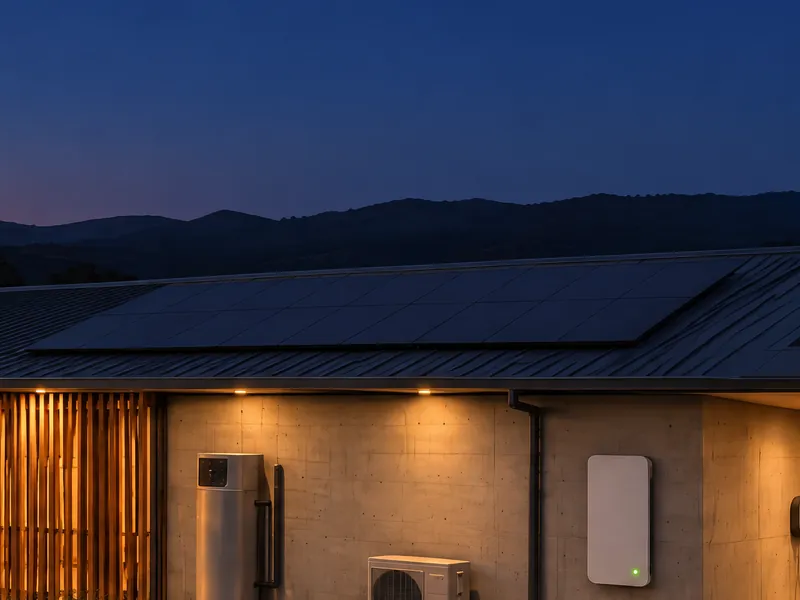




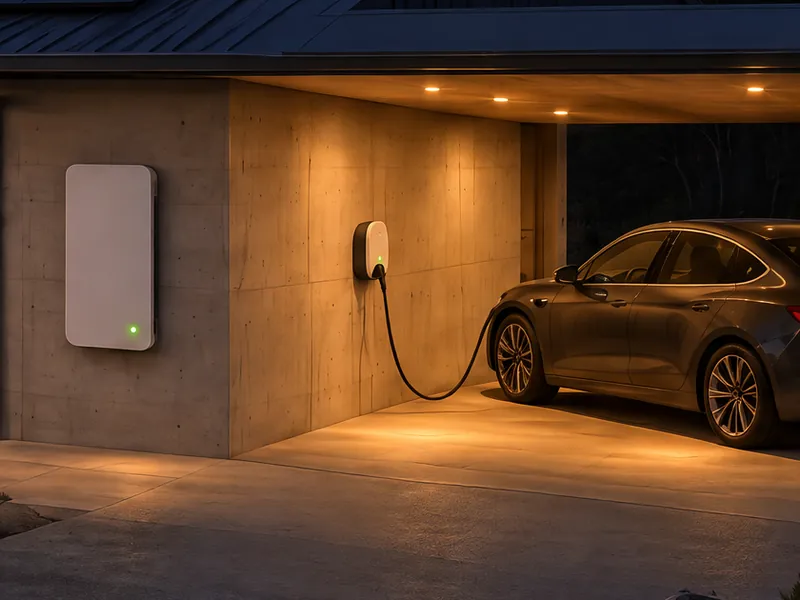



Adelaide solar batteries, sized to your home
The right battery depends on your evenings, your solar and whether you need backup. We work that out from your power bill before we recommend anything.

Which battery suits my home?
The one that matches your evening use, your solar and your inverter. Bigger is not always better. A battery too large for your solar or inverter can limit what you get from it, and the federal energy department says the same in its own guidance.
At your 90-minute in-home consultation we audit your bill and work through the points below, then give you a detailed return on investment.
- How much power you use after the sun goes down
- What your solar produces and what your inverter can handle
- Whether you want backup in a blackout
- Single-phase or three-phase power at your home
- Whether a modular system would let you expand later
Will it keep my power on in a blackout?
Only if your system includes backup capability. Not every battery provides it by default, so it needs to be part of the design from the start.
How much it runs depends on the battery and the setup. Some systems cover essential circuits such as lights, the fridge and Wi-Fi. Larger ones can back up the whole home. For long outages, compare it with a backup generator.
How the federal discount works
The Cheaper Home Batteries Program takes a discount off eligible batteries installed with new or existing solar. The amount depends on the battery’s usable capacity and its installation date, not the date you ordered it.
The STC factor is 6.8 for batteries installed by 31 December 2026 and 5.7 from 1 January to 30 June 2027. It then steps down every six months until 2030. It applies differently across three bands of usable capacity.
- Up to 14kWh: 100% of the factor
- Above 14kWh and up to 28kWh: 60% of the factor
- Above 28kWh and up to 50kWh: 15% of the factor
Smart controls
Your battery can do more than store solar. We can connect it to Australia’s wholesale energy market, so it responds to prices, grid demand and the weather. It can top up from the grid when prices drop, and export when they spike. At times when the grid is oversupplied, prices can fall low enough that you are paid to take power.
You do not need to change how you use power. The system runs in the background and lets you track your energy in real time. It works with Home Assistant, EVs, air conditioning, hot water and pool pumps.
The catch is battery size. Trading needs spare capacity, on top of what your home uses. Returns are not guaranteed, so we will tell you whether your battery is big enough for it to be worth doing.
What to expect after installation
Batteries and inverters we install carry a minimum 10 year warranty. Most quality lithium-ion batteries last 10 to 15 years. They need little upkeep, and an app shows your storage levels and usage in real time.
Common questions
Can I add a battery to my existing solar?
Yes. Most modern systems are battery-ready. We will check that your solar and inverter suit the battery before you commit.
Do I need solar to get the federal discount?
Yes. An eligible battery must be installed with a new or existing solar system. Product, installer and other requirements also apply.
What happens when the battery is full?
Extra solar is exported to the grid and earns feed-in credits.
What happens when the battery is empty?
Your home switches to grid electricity automatically.
Can I expand my battery later?
Some systems are modular and let you add units as your needs grow. Tell us if that matters, because it changes what we recommend.
Are home batteries safe?
Yes, when installed properly. Modern lithium-ion batteries have thermal management and automatic shutdown, and professional installation ensures compliance with safety standards.
Explore this topic
Questions people ask us
Related services
What our customers say
Reviews of Westside Energy on Google.


Book your bill audit
Leave your details and an energy expert will call to arrange a time.